
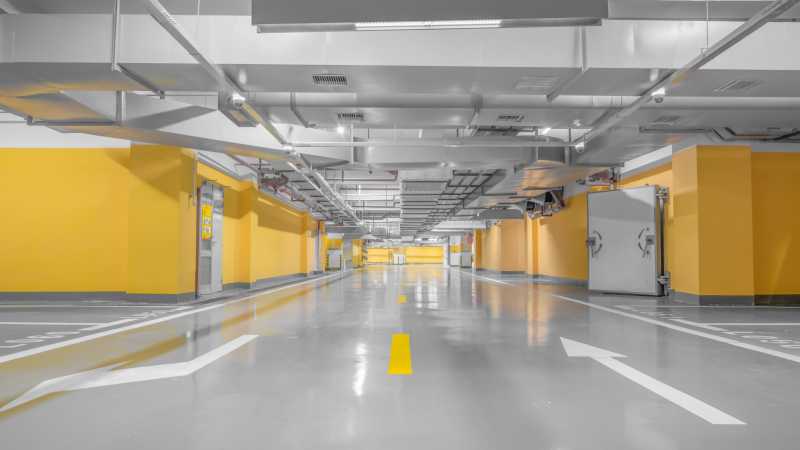
Your garage floor experiences constant wear from vehicles, heavy tools, oil spills, chemicals, moisture, and foot traffic. Over time, these elements can stain, crack, and damage ordinary concrete floors. Fortunately, epoxy garage floor paint offers one of the most durable and attractive solutions available for homeowners and commercial property owners alike.
Unlike standard concrete paint, epoxy forms a tough protective coating that bonds directly to the concrete surface. This creates a seamless, glossy finish that resists stains, chemicals, abrasions, and everyday wear. Whether you’re renovating your home garage, workshop, warehouse, or commercial facility, epoxy flooring provides outstanding durability while improving the overall appearance of your space.
In this comprehensive guide, you’ll learn everything about epoxy garage floor paint, including its benefits, disadvantages, installation process, costs, maintenance tips, and how it compares to traditional garage floor paint and ceramic tiles.
What Is Epoxy Garage Floor Paint?
Although many people call it “epoxy garage floor paint,” true epoxy flooring is actually a two-part coating system consisting of:
- Epoxy resin
- Hardener
When these two components are mixed, a chemical reaction occurs that creates an extremely hard, durable surface.
Unlike ordinary paint that simply sits on top of concrete, epoxy penetrates and bonds tightly with the floor. This strong bond makes the coating resistant to peeling, chipping, and heavy vehicle traffic.
Modern epoxy systems are available in various finishes, including:
- High gloss
- Satin
- Matte
- Metallic
- Decorative flake
- Solid colors
- Quartz finishes
Because of its versatility, epoxy has become one of the most popular garage flooring options worldwide.
Why Choose Epoxy Garage Floor Paint?
Homeowners and business owners continue choosing epoxy because it delivers exceptional long-term performance.
Some of the biggest advantages include:
- Excellent durability
- Attractive appearance
- Chemical resistance
- Easy maintenance
- Dust reduction
- Moisture protection
- Improved safety
- Long service life
Compared to untreated concrete, epoxy transforms the garage into a cleaner, brighter, and more functional workspace.
Is It Better to Paint or Epoxy a Garage Floor?
One of the most common questions homeowners ask is whether they should choose regular garage floor paint or epoxy.
The answer depends on your budget, expectations, and long-term goals.
Garage Floor Paint
Garage floor paint is usually an acrylic or latex coating designed specifically for concrete surfaces.
Advantages include:
- Lower upfront cost
- Simple application
- Fast drying
- Suitable for light use
However, garage floor paint has several limitations.
It can:
- Chip easily
- Peel under heavy traffic
- Wear quickly
- Stain from oil and chemicals
Most painted garage floors require repainting every few years.
Epoxy Garage Floor Paint
An epoxy coating provides significantly better protection.
Benefits include:
- Strong chemical resistance
- Excellent adhesion
- Resistant to hot tire pickup
- Waterproof surface
- High durability
- Easy cleaning
- Long lifespan
Vehicle fluids such as:
- Motor oil
- Antifreeze
- Brake fluid
- Gasoline
can usually be wiped away without permanently staining the surface.
For homeowners seeking a professional finish that lasts for years, epoxy is the superior option.
Benefits of Epoxy Garage Flooring
Installing epoxy flooring offers numerous practical advantages.
Outstanding Durability
Epoxy withstands:
- Heavy vehicles
- Toolboxes
- Machinery
- Constant foot traffic
Properly installed coatings can last well over a decade.
Chemical Resistance
Garages frequently encounter harsh chemicals.
Epoxy resists:
- Oil
- Gasoline
- Brake fluid
- Transmission fluid
- Road salt
- Household cleaners
This makes maintenance much easier.
Attractive Appearance
Epoxy creates a polished, high-end finish.
Available colors include:
- Gray
- White
- Black
- Beige
- Blue
- Red
Decorative flakes and metallic finishes add additional visual appeal.
Easy Cleaning
Smooth epoxy surfaces do not trap dust like unfinished concrete.
Cleaning usually requires only:
- Sweeping
- Vacuuming
- Mopping with mild detergent
Spills wipe away easily.
Moisture Protection
Concrete naturally absorbs moisture.
Epoxy seals the surface, helping reduce:
- Water penetration
- Mold growth
- Surface deterioration
Improved Brightness
Glossy epoxy reflects light.
A brighter garage often requires fewer lighting fixtures, improving visibility while reducing energy costs.
Types of Epoxy Garage Floor Coatings
Several epoxy systems are available depending on your needs.
Water-Based Epoxy
Water-based epoxy is popular for residential garages.
Advantages include:
- Lower cost
- Easier installation
- Low odor
- Environmentally friendly
Although durable, it offers slightly less protection than solvent-based systems.
Solvent-Based Epoxy
This option provides stronger adhesion and greater durability.
Benefits include:
- Better chemical resistance
- Harder finish
- Longer lifespan
However, installation produces stronger fumes.
100% Solid Epoxy
This premium option contains no solvents.
Advantages include:
- Maximum durability
- Thick protective layer
- Superior longevity
Professional installers often recommend this option for heavy-duty garages.
Metallic Epoxy
Metallic pigments create dramatic three-dimensional effects.
Popular in luxury garages and showrooms, metallic epoxy combines durability with stunning visual appeal.
Step-by-Step Installation Guide
Proper installation determines the success of any epoxy floor.
Step 1: Inspect the Concrete
Check for:
- Cracks
- Moisture problems
- Oil stains
- Surface damage
Repair defects before proceeding.
Step 2: Clean Thoroughly
Remove:
- Dirt
- Grease
- Paint
- Dust
- Chemicals
Clean concrete allows proper epoxy bonding.
Step 3: Etch or Grind the Surface
Smooth concrete prevents adhesion.
Mechanical grinding or acid etching creates microscopic texture that allows epoxy to bond securely.
Step 4: Repair Cracks
Fill cracks and holes using concrete repair products.
A smooth surface creates better final results.
Step 5: Apply Primer
Many epoxy systems recommend a primer coat.
Primer:
- Improves adhesion
- Seals concrete
- Reduces air bubbles
Step 6: Mix the Epoxy
Carefully combine:
- Resin
- Hardener
Follow manufacturer instructions exactly.
Incorrect mixing affects durability.
Step 7: Apply the Epoxy
Use:
- Rollers
- Brushes
- Squeegees
Work in manageable sections while maintaining consistent thickness.
Step 8: Add Decorative Flakes (Optional)
Many homeowners broadcast decorative vinyl flakes into wet epoxy.
Benefits include:
- Better appearance
- Improved slip resistance
- Enhanced durability
Step 9: Apply a Clear Topcoat
A polyurethane or polyaspartic topcoat provides additional:
- Scratch resistance
- UV protection
- Gloss retention
This final layer significantly extends floor life.
Step 10: Allow Proper Curing
Avoid rushing the curing process.
Typical curing timeline:
- Light foot traffic: 24 hours
- Vehicle traffic: 5–7 days
Always follow product recommendations.
How Much Does Epoxy Flooring Cost?
Epoxy flooring costs vary depending on:
- Floor size
- Surface condition
- Epoxy type
- Labor charges
- Decorative finishes
For commercial flooring, average pricing may look like this:
| Floor Size | Average Cost Per Sq. Ft. | Example Total Cost |
|---|---|---|
| 550–1,500 sq. ft. | $1.42 | 1,000 sq. ft. = $1,420 |
| 1,500–5,000 sq. ft. | $1.32 | 3,000 sq. ft. = $3,960 |
| 5,000+ sq. ft. | $1.22 | 10,000 sq. ft. = $12,200 |
Residential garage installations typically cost more per square foot because of preparation work, custom finishes, and smaller project sizes.
Factors That Affect Installation Cost
Several factors influence the final project price.
These include:
- Concrete condition
- Crack repairs
- Moisture mitigation
- Decorative flakes
- Metallic finishes
- Surface grinding
- Number of epoxy coats
- Professional labor
- Garage size
Investing in quality preparation often produces longer-lasting results.
How Long Does Epoxy Garage Flooring Last?
With proper installation and routine maintenance, epoxy garage floor paint can last 10 to 20 years in residential garages.
Its lifespan depends on:
- Traffic levels
- Surface preparation
- Installation quality
- Cleaning habits
- Exposure to sunlight and chemicals
A professionally installed system generally lasts much longer than a DIY application.
For more info visit Decoration Advice