
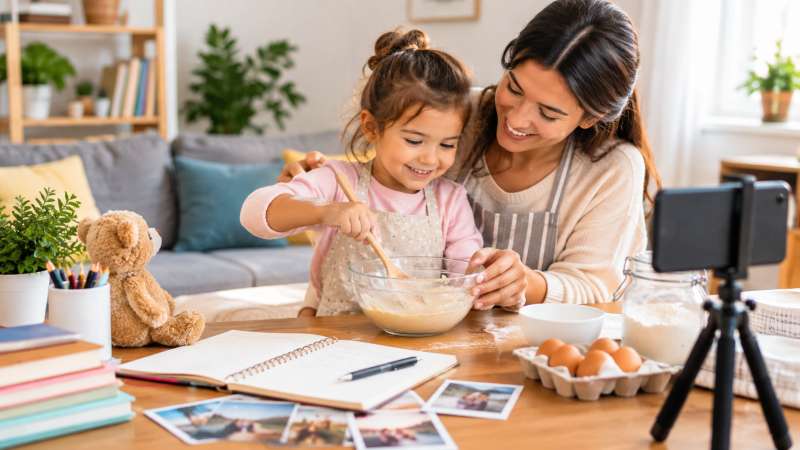
Parenting can be joyful, rewarding, and deeply meaningful, but it can also feel overwhelming. Modern parents often manage busy schedules, household responsibilities, work, school activities, and countless small decisions every day. In the middle of all this activity, parents sometimes forget to pause and appreciate the ordinary moments that make childhood special.
fpmomhacks parenting advice by famousparenting focuses on a simple but powerful idea: parents do not need to create perfect childhoods. Instead, they can pay attention to everyday experiences, preserve meaningful memories, and build stronger connections with their children through small actions.
The approach combines memory-capturing ideas with practical household routines. Rather than requiring expensive equipment, complicated schedules, or elaborate family activities, these suggestions encourage parents to notice what is already happening around them.
From recording a child’s funny voice to allowing them to help in the kitchen, these simple practices can turn ordinary days into memories that families can treasure for years.
What Is FPmomhacks Parenting Advice?
FPmomhacks represents a collection of practical parenting ideas designed around everyday family life. The suggestions emphasize convenience, emotional connection, memory preservation, and participation.
Parents often concentrate on major milestones such as birthdays, first days of school, vacations, and holidays. However, children grow and change every day. Their little voices, favorite expressions, walking styles, interests, and imaginative ideas can disappear surprisingly quickly.
That is why small moments deserve attention.
The philosophy behind these parenting ideas encourages adults to slow down occasionally and observe their children without trying to make every moment perfect. A messy kitchen, scattered toys, bedtime conversations, or a child’s imaginative explanation of their bedroom can become meaningful memories.
The goal is not to document everything. Instead, parents can capture the moments that feel uniquely connected to their child’s personality and development.
Why Everyday Childhood Moments Matter
Childhood moves quickly. A toddler who currently mispronounces a favorite word may speak differently a few months later. A child who loves carrying a particular toy may eventually stop playing with it.
These changes are natural, but parents may wish they could remember the details later.
Photography helps, but memories involve more than pictures. A photograph can show what a child looked like, while a voice recording can preserve how they sounded. A written note can preserve something they said. A short video can capture their movement, personality, and behavior.
Therefore, effective memory keeping uses different formats.
Parents can take photographs, record short videos, save voice notes, write down funny statements, and create simple physical keepsakes. These activities do not need to become another demanding responsibility. Even a few minutes can make a difference.
Film Them Walking Away
Parents naturally photograph their children’s faces. However, some of the most meaningful footage can show children from behind.
Record your child walking away, running toward a favorite place, climbing stairs, or moving through the house. These videos can capture tiny details that parents may not notice in everyday life.
Pay attention to:
- The way they walk
- Their unique running style
- How they hold their hands
- Their favorite shoes
- The way they carry toys
- Their reactions to new surroundings
Children change quickly. A walking style that seems ordinary today may become a precious memory later.
You do not need professional equipment. A smartphone can capture a short clip whenever the moment feels worth remembering.
Ask About Future Dreams
Children often have wonderfully creative ideas about their futures. One day they may want to become a doctor, while the next day they may dream about becoming an astronaut, artist, teacher, chef, athlete, or superhero.
Instead of correcting these ideas, parents can listen and record their exact words.
Ask questions such as:
- What do you want to be when you grow up?
- Where would you like to live?
- What would your dream house look like?
- What would you do if you could travel anywhere?
- What would your perfect day include?
Write down their answers and add the date.
Years later, these notes can become fascinating family memories. Children can also enjoy reading their younger answers when they become older.
Most importantly, parents can use these conversations to learn more about their children’s interests and imagination.
Let Children Help in the Kitchen
Cooking with children can take longer and create more mess, but that does not mean parents should always keep them away from the kitchen.
Children often enjoy participating in everyday household activities because they want to feel included. Simple tasks can provide opportunities for conversation, learning, and connection.
Depending on the child’s age, parents can let them:
- Wash suitable fruits and vegetables
- Stir ingredients with supervision
- Arrange food on a plate
- Measure safe ingredients
- Help prepare sandwiches
- Choose between simple meal options
- Set the table
Of course, parents should always supervise children around heat, sharp objects, appliances, and other kitchen hazards.
The objective is not to create a perfect meal. Instead, it is to share time together.
Sometimes the extra ten minutes spent cooking with a child can become more valuable than the perfectly organized kitchen a parent could have maintained alone.
Save Your Child’s Voice
Children’s voices change as they grow. Parents may remember their voices emotionally, but recordings can preserve those sounds in a much more direct way.
Save short voice notes of your child saying their favorite words, telling a story, singing a song, or simply calling your name.
You can organize recordings by date so you can listen to them later.
For example, create folders based on years or ages. A short recording from age two may sound completely different from one recorded at age five.
These recordings can become powerful family keepsakes.
However, parents should avoid turning every interaction into a recording session. The purpose is to preserve occasional meaningful moments while remaining present during everyday life.
Give Children Room-Tour Moments
Children often see their rooms differently from adults. A bedroom may look like a collection of toys and furniture to a parent, but to a child, it can represent an entire world.
Ask your child to give you a room tour.
Let them explain:
- Their favorite toy
- Where they keep special items
- Their favorite corner
- Their artwork
- Their books
- Their collections
- What they imagine each space represents
Record the tour if your child enjoys it.
This simple activity can reveal your child’s personality and imagination. Later, the recording can also show how their interests changed over time.
Trace Tiny Feet and Shoes
Children’s feet grow quickly, making them excellent symbols of childhood change.
Place a child’s foot or shoe on paper and trace around it. Write the date and age beside the outline. Parents can repeat this activity every year.
You can keep the pages in a memory folder or scrapbook.
This idea requires very little money, yet it creates a physical record of growth.
Parents can also compare the outlines over time and discuss how much their child has grown.
Turn Cleanup Into a Game
Cleaning up toys does not have to become a daily argument.
Parents can transform tidying into a game. For example, play an upbeat song and challenge children to put away as many toys as possible before the music ends.
Another option involves counting.
Say, “Let’s find ten toys that belong in the basket.”
Then encourage the child to search for them.
You can also create categories such as:
- Cars in one box
- Building blocks in another
- Books on the shelf
- Stuffed animals in their basket
This approach makes children active participants rather than passive recipients of instructions.
Over time, children can develop better organizational habits while experiencing less resistance toward cleanup.
Make Small Moments More Important Than Things
Children do not always need expensive toys, elaborate vacations, or constant entertainment to feel loved.
Often, children value attention more than material possessions.
A parent sitting beside a child while they draw can create connection. Listening to a story before bedtime can build security. Walking together can create conversation. Eating breakfast together can become a familiar family tradition.
These moments may appear insignificant, but repetition gives them emotional importance.
This is one of the most useful principles behind fpmomhacks parenting advice by famousparenting: meaningful parenting often happens through small, consistent actions rather than dramatic gestures.
Practice Being Present
Modern technology can make it difficult for parents to remain fully present. Phones, notifications, work messages, social media, and household responsibilities can compete for attention.
Parents do not have to eliminate technology completely. Instead, they can create small periods when the family focuses on each other.
Try setting aside specific moments for:
- Family meals
- Bedtime conversations
- Outdoor walks
- Reading
- Creative activities
- Weekend games
- Short one-on-one conversations
During these moments, put unnecessary distractions aside.
Children notice when adults listen carefully. Consistent attention can help children feel valued, understood, and emotionally secure.
Create a Simple Memory System
Memory keeping becomes easier when parents use a simple system.
You could create four categories:
Photos
Save important photographs in folders organized by year or child.
Videos
Keep meaningful clips that show personality, movement, celebrations, or everyday experiences.
Voice Notes
Store recordings of funny statements, songs, stories, and conversations.
Written Memories
Write down memorable phrases, achievements, questions, dreams, and funny incidents.
The system does not need to be complicated. The best system is one that parents can maintain consistently.
Avoid Trying to Capture Everything
One common mistake is attempting to document every moment.
Parents may become so focused on taking photographs and videos that they stop experiencing the moment themselves.
Instead, use selective memory keeping.
Ask yourself:
“Will I want to remember this specific detail years from now?”
If the answer is yes, capture it.
If not, simply enjoy the moment.
A balance between documenting childhood and living it is essential.
Use Parenting Hacks Without Losing Flexibility
Parenting advice should support families rather than create additional pressure.
Every child has a different personality, and every household has different routines. Therefore, parents should adapt suggestions according to their children’s ages, abilities, interests, and family circumstances.
For example, a cleanup game that works perfectly for a preschooler may not appeal to an older child. Similarly, a room-tour activity may work better when the child naturally enjoys explaining their belongings.
The key is flexibility.
Parents should treat parenting hacks as tools, not strict rules.
Build Stronger Family Connections
Small routines can strengthen relationships because they create predictable opportunities for interaction.
For example, a family might establish a five-minute bedtime conversation. Another family may cook together every weekend. Someone else may take a short evening walk with their child.
These traditions do not need to look impressive.
Consistency matters more than complexity.
Children often remember repeated family rituals because those rituals create a sense of belonging.
Encourage Children to Participate
Good parenting does not mean adults handle everything themselves.
Children can participate in age-appropriate household activities. They can organize toys, help prepare meals, select clothes, arrange books, or assist with simple household tasks.
Participation teaches responsibility while also creating shared experiences.
Parents should give children realistic expectations and praise effort rather than demanding perfection.
When children understand that their contributions matter, they can develop confidence and independence.
Make Memory Keeping a Family Activity
Parents do not have to manage every memory project alone.
Older children can help create family albums. They can select favorite photographs, write captions, record stories, or organize keepsakes.
Younger children can draw pictures or decorate memory pages.
This approach turns memory keeping into another family activity.
Moreover, it teaches children that their experiences and perspectives matter.
The Importance of Simple Parenting
Parenting can sometimes feel like a competition. Social media can create the impression that successful families must constantly travel, organize activities, create perfect meals, and document beautiful moments.
Real family life is different.
Children can find happiness in simple experiences. They may remember sitting beside a parent while cooking, laughing during cleanup, hearing a bedtime story, or talking about an imaginary future.
Parents do not need to create a picture-perfect childhood.
They need to create a childhood filled with connection, safety, attention, encouragement, and love.
Practical Daily Checklist for Parents
Parents can use this simple checklist to apply these ideas without creating a complicated schedule:
- Spend a few minutes giving your child your full attention.
- Capture one meaningful moment when appropriate.
- Listen to something your child wants to tell you.
- Let your child help with an age-appropriate household task.
- Turn one routine activity into a game.
- Save an occasional voice recording.
- Write down a funny or memorable statement.
- Ask your child about their interests and dreams.
- Put unnecessary distractions away during family time.
- End the day with a positive conversation or connection.
The goal is not to complete every item every day. Instead, use the list as inspiration.
How to Make These Hacks Sustainable
The best parenting routine is one that fits naturally into your life.
Do not create a huge memory project that becomes stressful after a week. Start with one simple habit.
For example, record one voice note each month. Take a short video when your child does something noticeably different. Write down one memorable sentence every few weeks.
Small efforts accumulate.
After several years, these individual moments can form a detailed picture of your child’s early life.
This is another important lesson from fpmomhacks parenting advice by famousparenting. Parents can preserve meaningful childhood memories without turning parenting into a constant documentation project.
Final Thoughts
Parenting does not require perfection. It requires presence, patience, flexibility, and meaningful connection.
The most valuable childhood memories often come from ordinary experiences. A child’s tiny footsteps, funny voice, imaginative dreams, messy cooking attempts, favorite room, and growing feet can all become treasured memories.
Parents can use simple techniques such as filming children walking away, recording their voices, tracing their feet, asking about future dreams, and turning cleanup into games.
At the same time, parents should remember to put the camera down and experience childhood alongside their children.
Ultimately, the strongest family memories come from a combination of capturing special moments and fully living them. By focusing on simple routines, shared experiences, and genuine attention, parents can create an environment where children feel loved, heard, involved, and secure.
That balance makes practical parenting advice truly useful: it helps parents manage everyday responsibilities while remembering that childhood itself is the most important part of the journey.
For more info visit DecorationAdvice